
Ну что ж! Буквально в предыдущем блоге подняли проблему европейского новояза - "евро-жаргона". ЕС даже подготовил мини-гид евро-жаргона, чтобы облегчить нам жизнь.
Но жизнь новояза еще более интересна. Особенно, когда речь идет об Интернет-жаргоне. Сколько раз, получая сообщения, приходили вы в замешательство, увидев странный набор букв? "Ах, так это же оказывается аббревиатура!" - отвечали вы себе.
Но что обозначает сия аббревиатура? Вот задачка из задач, особенно для тех, кому за 30.
Возьмем для примера "ИМХО". Что это - История международных хозяйственных отношений или Ищу мужа - хорошего отца или Ищите меня, хочу отзовусь? Да, нет же! Это наша любовь к заимствованиям из английского языка. Оказывается, это IMHO - "in my humble opinion".
Наша жизнь в виртуальном пространстве занимает большую часть нашего времени. Мы разучились писать простые письма и отправлять их обычной почтой, через почтовое отделение связи. Слово "почта" у нас в первую очередь ассоциируется с электронной почтой, но никак не с Главпочтампом. Наше стремление (а вызвано оно реалиями жизни) все сделать быстрее и еще умудриться сделать одновременно несколько дел, заставило нас вводить в оборот бесконечные сокращения и аббревиатуры.
OMG! Скоро надо будет носить с собой словарь, чтобы понять своего BFF :)
Интернет жаргон проник уже даже в Оксфордский словарь английского языка.
Поседние обновления были внесены в марте 2011 года.
FYI: TMI иногда даже ♥ пользователям NETa
-----------------------------------
Online abbreviations make the Oxford English Dictionary AP | Mar 26, 2011
OMG! The exclamatory online abbreviation has won the approval of the Oxford English Dictionary. LONDON:
OMG! The exclamatory online abbreviation has won the approval of the Oxford English Dictionary. The term-short for "Oh my God" or "Oh my gosh" - is one of dozens of new entries in the authoritative reference book's latest online update.
Other Internet-inspired expressions given the stamp of approval include LOL, "laughing out loud"; IMHO, "in my humble opinion"; and BFF, "best friends forever." Dictionary compilers said that although the terms are associated with modern electronic communications, some are surprisingly old.
The first confirmed use of "OMG" was in a letter in 1917. "Things people think are new words normally have a longer history," Graeme Diamond, the dictionary's principal editor for new words, said Friday. "Who knows how many people from 1917 onwards were using that term, in correspondence that we just don't have access to. With the advent of the mass media we have access to much more personal information."
That helps explain a flood of new terms from the online world, including ego-surfing-the practice of searching for your own name on the Internet-and dot bomb, a failed
Internet company. Not all the new abbreviations originated online. One new entry is wag, for "wives and girlfriends."
First used in 2002 to describe the female partners of the England soccer team, it is now used to denote the glamorous and extravagant female partners of male celebrities. "By our standards WAG is a real rocket of a word," Diamond said. "To go from being coined in 2002 to being included in 2011 is quite unusual."
The new update includes about 900 new words and meanings, from "flat white"- _a milky espresso-based drink originating from Australia and New Zealand-to "muffin top," defined as "a protuberance of flesh above the waistband of a tight pair of trousers." The dictionary also includes a new entry for "heart" as a verb, a casual equivalent of "to love" that is represented with a symbol, as seen on millions of souvenirs proclaiming "I (heart)
New York."
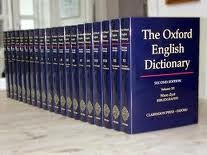 Editors publish updates to the online Oxford every three months. The Internet version of the dictionary, which launched in 2000, gets 2 million hits a month from subscribers and may eventually replace the mammoth 20-volume printed
Oxford English Dictionary, last published in 1989.
Editors publish updates to the online Oxford every three months. The Internet version of the dictionary, which launched in 2000, gets 2 million hits a month from subscribers and may eventually replace the mammoth 20-volume printed
Oxford English Dictionary, last published in 1989.
By the time the lexicographers finish revising and updating a new edition-a gargantuan task that will take a decade or more-publishers doubt there will be a market for the printed form. By then, a multi-volume printed work may be-to use another new OED entry-TMI: too much information.
------------------------------------------------------------
Итак, добавлено более 900 слов!
-------------------------------------------------------------
Среди прочих были добавлены такие слова, как:
-----------------------------------------------------
По материалам http://www.oed.com/public/latest/latest-update#rev
 Тамара Шашихина26 марта 2011

Комментарии
Показать все комментарии